
Whoa! Ever been two clicks away from panic because a token transfer looked… weird? Seriously? It happens. I’m biased, but blockchain explorers are the unsung heroes of crypto hygiene. They show receipts — cold, hard on-chain receipts — and for Solana, Solscan is one of those tools I reach for when somethin’ feels off.
Quick gut reaction: Solscan feels speedy. Fast search, quick load. My instinct said it was mostly polished UX, but then I dug deeper and noticed edge cases. Initially I thought it would be just a prettier Solana explorer, but actually, wait—let me rephrase that: it’s more than aesthetics. The token tracker features, holder breakdowns, and token mint pages give context that the default Solana explorer sometimes buries.
Short aside: here’s what bugs me about explorers in general — they can make common-user mistakes look like scams. That ambiguity is a real problem. On one hand, explorers democratize chain visibility. Though actually, on the other hand, they don’t always make trust easy to parse for newcomers. So you get curious users digging into transaction metadata and then getting lost in timestamp after timestamp.
I use Solscan for three everyday tasks: confirming a token mint, verifying holder distributions, and tracing failed transfers. For example, last month I traced a token airdrop that hit the wrong wallet. The token mint page showed the mint authority and supply history, and that led me straight to the contract’s creation tx. It saved a lot of guesswork. Wow!
What the token tracker actually helps you do
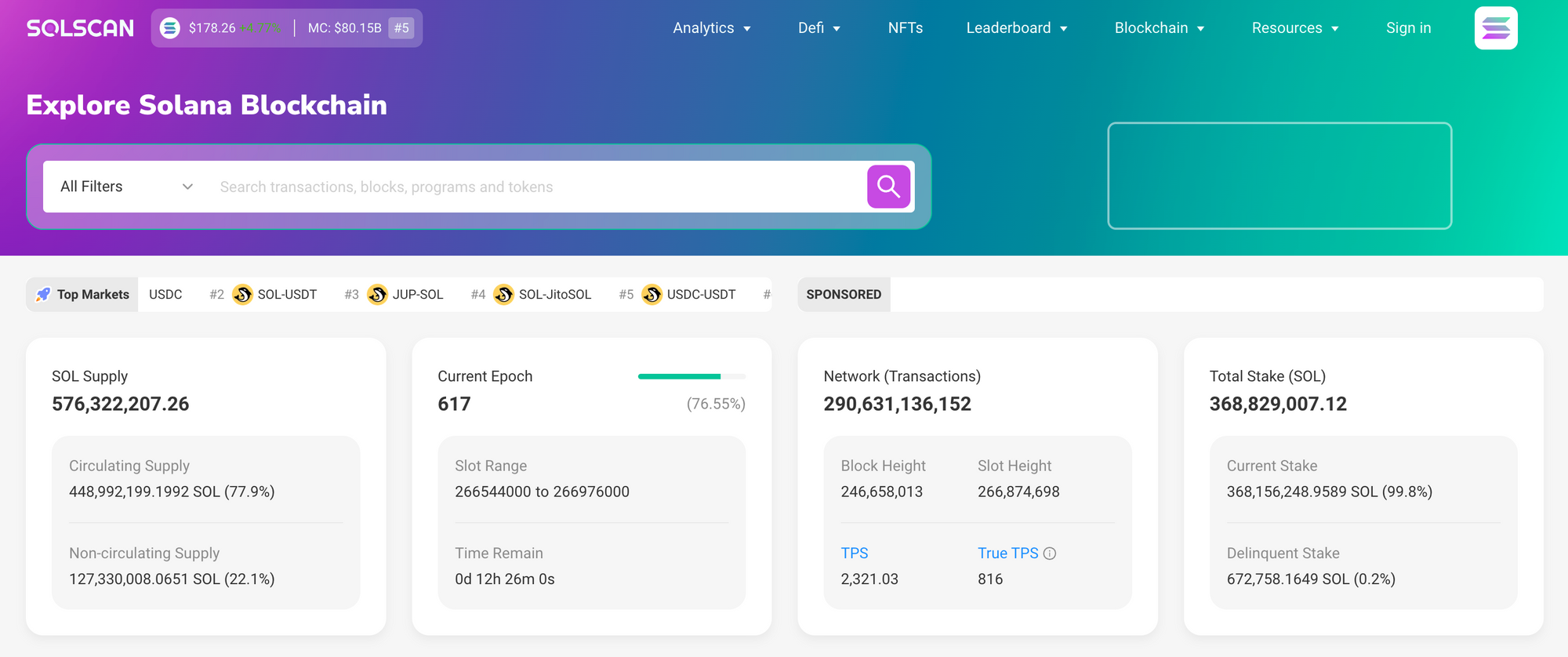
Okay, so check this out—Solscan’s token tracker isn’t just a list. It combines visuals and raw data: token supply graphing, holder concentration, recent transfers, and contract metadata. If you want to know whether a token’s supply is concentrated in one wallet, you can see it in seconds. If you need to audit mint authority or confirm decimals, it’s there. My first impression was “simple and clean.” Then I tested complex tokens and realized some metadata fields are inconsistent across mints — so watch out.
For devs and power users, Solscan’s transaction trace is frankly indispensable. You can follow SPL transfers across accounts, check inner instructions, and even correlate program logs if a program emitted one. That kind of visibility is where on-chain debugging meets digital detective work. I’m not 100% sure every edge case is covered, but it’s very very helpful for most common workflows.
Practical tip: when a token looks suspicious, check these in order — mint authority, token supply history, top 10 holders, and recent large transfers. If one wallet holds an unusually high percentage, pause. Hmm… my instinct said to always double-check on-chain approvals and delegate signatures, too. Those can be subtle.
Comparing Solscan to Solana’s native explorer: the native explorer is fine for basic tx lookups. Solscan layers an analytics lens on top. That means fewer clicks to find holder charts and transaction breakdowns. For traders and wallet builders in the US crypto scene, that simplifies risk assessments. Still, nothing replaces careful reading of program logs when you’re trying to be forensic.
One limitation worth calling out — token metadata sometimes relies on off-chain sources, like decentralized naming services or provided URLs. That introduces ambiguity. So if a token page links to an external site, treat it like a pointer, not proof. And hey, don’t blindly trust token icons as validation. They’re easy to spoof. Seriously, they are.
On usability: Solscan has keyboard shortcuts and quick filters that feel built by someone who uses a keyboard a lot. That small detail matters when you’re scanning dozens of tokens after a suspicious drop. It speeds the triage process. I use it during maintenance windows and messy airdrops; it keeps me sane. (Oh, and by the way, the interface is mobile-friendly enough for quick checks on the go.)
For teams building wallets or extension apps, Solscan’s public pages are often the reference link shared in support chats. I’ve pasted a single direct page before to show a user their token holdings history — it translates what “on-chain” means into a UI non-technical folks can click. That said, if you’re building a product relying on any explorer, plan for occasional data inconsistencies. Cache smartly, verify programmatically when necessary, and treat explorers as helpful but not authoritative backups.
Where to go for more — and one link I use all the time
If you’re ready to poke around, start with a token mint page and then check holders and transfers. For a direct route to Solscan’s pages (if you want to bookmark it), here’s the official path I use: https://sites.google.com/cryptowalletextensionus.com/solscan-explorer-official-site/ — it’s the place I share when teammates ask for a single reference link, because it’s simple to copy and paste into chats.
Also: set alerts where possible. If your wallet or a monitoring tool can ping you on large transfers, you prevent a lot of “how did this happen” moments. My workflow is alert-first, investigate-second. Initially I thought that was overkill, but then one late-night transfer to a cold wallet saved hours of follow-up. That was an “aha!” moment.
FAQ
How accurate is the token holder breakdown?
Pretty accurate for on-chain balances. It reflects current SPL balances at query time. Though, remember that token accounts might be distributed across multiple addresses belonging to one entity; the chart shows addresses, not people. So sometimes holdings look more decentralized than they really are.
Can Solscan detect scams or rug pulls?
Not automatically in a foolproof way. It gives you the evidence: mint authority, supply changes, and transfer patterns. Use those clues. If the mint authority is still open and large transfers are happening to unknown wallets, that’s a red flag. I’m not saying it will stop a scam, but it gives you the breadcrumbs to decide quickly.
