
Whoa. Okay, so check this out — logging into an exchange should be boring, right? Instead, it often turns into a small anxiety spiral. My instinct said this would be simple, but then I dove into a week of helping friends and realized the friction points are everywhere. Something felt off about how many people treat OKX like one monolith when it’s really a few moving parts: verification, spot crypto, and futures. I’m biased, but that distinction matters — a lot.
Here’s the thing. At first glance OKX looks like any major exchange: nice UI, lots of markets, margin and futures options. Seriously? Yep. But dig in and the verification flows, product expectations, and leverage mechanics reveal gaps where traders lose time, money, or both. On one hand you want to jump into a BTC position; on the other hand your KYC is pending and your US-compliant limits are unclear. Hmm… that mismatch is exactly where users get burned.
Let me break it down from real usage — not just docs. I created accounts, helped a buddy recover one late-night (oh, and by the way he swore he did everything right), and watched a few margin calls happen in real-time. Initially I thought most issues were paperwork. Actually, wait — turns out the common problems cluster into three practical buckets: verification delays, misunderstanding spot vs. futures rules, and leverage risk management. We’ll walk those through, step by step, and I’ll flag where people usually screw up.
Verification: slow steps, high stakes. First, you’ll hit KYC checks. For US-related users there are additional compliance constraints (even if you’re using VPNs, which… don’t). Something simple like a blurry ID photo will reset the queue. My recommendation: prepare crisp scans, use the official mobile camera flow, and don’t switch browsers mid-process — the session tokens sometimes drop and you restart. My gut said that patience would solve it; but in practice, proactive prep shortens the wait.
Seriously? Yes. Not all verification rejections are obvious. The system may say “photo unclear” but the real issue could be mismatch between name on ID and name on bank card. So double-check everything. If you want a quick path to the login page and initial flow, I often point folks to a stable landing like okx — it’s handy for starting the session and seeing the prompts in the order they show up. Use it as a checklist: email verified, 2FA set, ID uploaded, selfie verified.
Now for crypto spot basics. Spot trading is intuitive for many: buy low, sell high. But there’s nuance. Fees differ by maker/taker, and those small slugs add up over frequent trades. Also, deposit networks matter — deposit wrong chain, funds stuck. I once watched a friend send USDC via an unsupported chain and his trade plan evaporated for weeks while he coordinated support. Oof. So read the deposit modal — I know, boring — but that one step prevents long waits and support tickets.
Futures. Ah, that’s the area where adrenaline meets math. Futures involve leverage, which magnifies not just gains but small mistakes. On OKX you’ll see isolated vs. cross margin, position tiers, and estimated maintenance margin. My experience says many traders glance at leverage and miss the maintenance margin detail until liquidation is imminent. On one hand high leverage gives edge; though actually, if your risk controls aren’t set (stop-loss, position sizing), leverage converts a strategy advantage into a cliff.
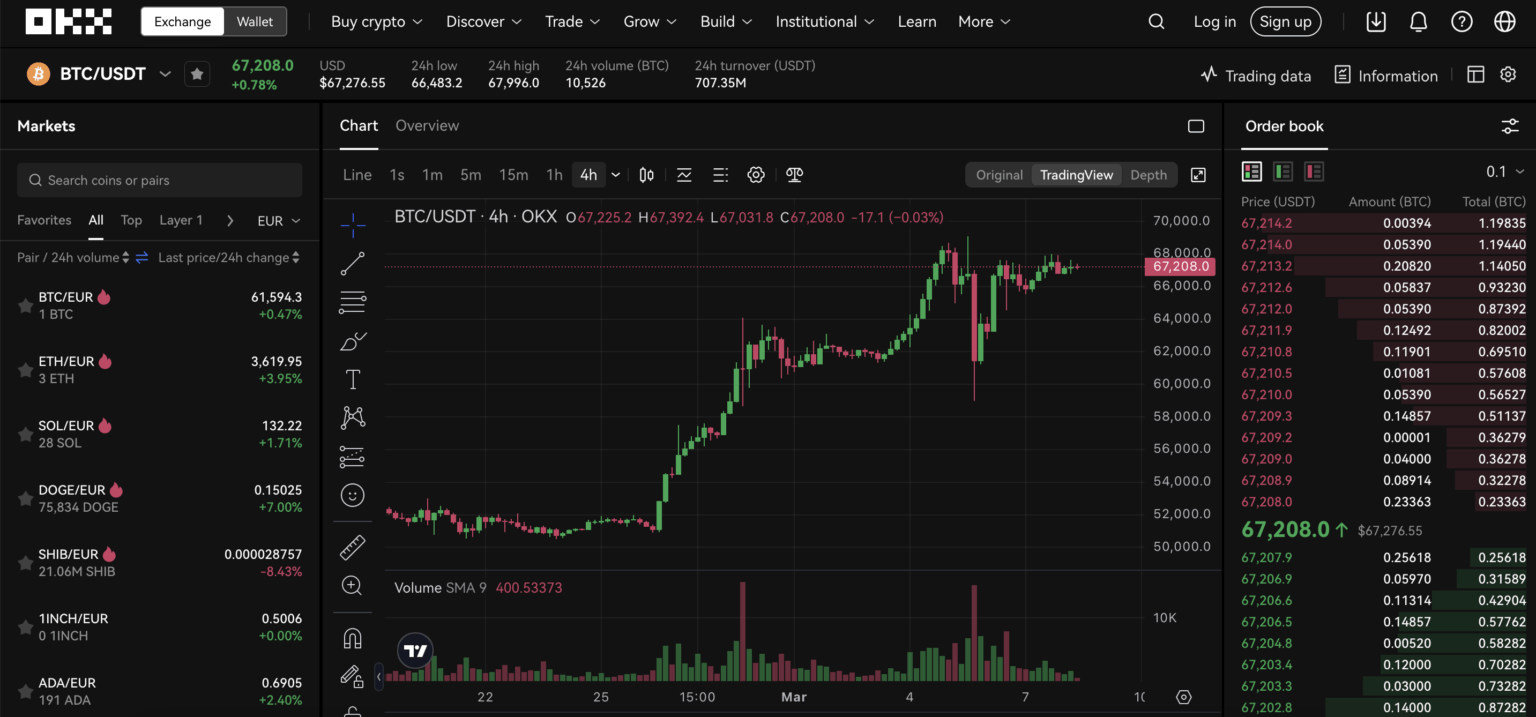
Here’s a concrete routine I use and recommend: set a maximum leverage per asset (based on volatility), pre-calc your liquidation price in the order UI, and never trade near your entire account balance. Seriously, don’t. Something else that bugs me: folks often rely on mobile charts only. That’s fine sometimes, but for futures you want depth data and the full order book on desktop before you add leverage.
Practical fixes — what to do, right now
Short checklist first: verify ID with clear photos, enable 2FA, use the right deposit chain, and predefine leverage limits. Medium step: set up a trading journal and note each trade’s entry, stop, size, and rationale. Long-term: learn margin math — maintenance margin, initial margin, and how funding rates work. Okay, that sounds formal… but honestly, the margins and funding are what decide long-term viability for futures traders.
Let me explain funding rates in plain terms — quickly. Funding keeps perpetual futures price aligned with spot. If longs pay shorts, being long costs you over time; if reversed, shorts pay. Initially I thought funding was negligible for short holds, but after holding positions across funding timestamps I realized compounding fees change the P&L shape. So you’ll want to monitor funding calendars if you plan to hold beyond a few hours.
Risk control also isn’t glamorous. Use limit orders when liquidity is thin, size positions to tolerate a 5–10% adverse swing without liquidation, and set stop-losses outside noise but inside your risk tolerance. My instinct said tighter stops are safer — but they also get picked off by volatility spikes. On the other hand, too wide and you risk catastrophic drawdown. It’s a balance. I’m not 100% sure of the “perfect” percent — there isn’t one — but those guardrails save your account.
Support and dispute tips: if verification stalls, don’t spam tickets. Provide concise documentation, timestamps, and reference numbers. I watched someone paste a paragraph-long complaint and get ignored; then they resubmitted a clean one-line with attachments and the review progressed. So tidy communication matters — odd but true.
FAQ
How long does OKX verification usually take?
Time varies. Many users see basic KYC cleared within 24–72 hours; tougher cases (address checks, document mismatch) take longer. If you’re in a high-volume window or your documents need manual review, expect delays. Upload clear scans and accurate personal details to speed it up.
Can I trade futures before full verification?
Generally no — trades with higher leverage often require more stringent verification. Some spot features may be available earlier, but futures and margin trading usually need completed KYC and 2FA enabled. That’s for good reason: regulatory and counterparty risk controls.
What’s the biggest rookie mistake with OKX futures?
Over-leveraging without accounting for maintenance margin and funding rates. Also, not checking which margin mode (cross vs. isolated) you used. Those settings change liquidation behavior in ways that catch traders off guard.
